Definition
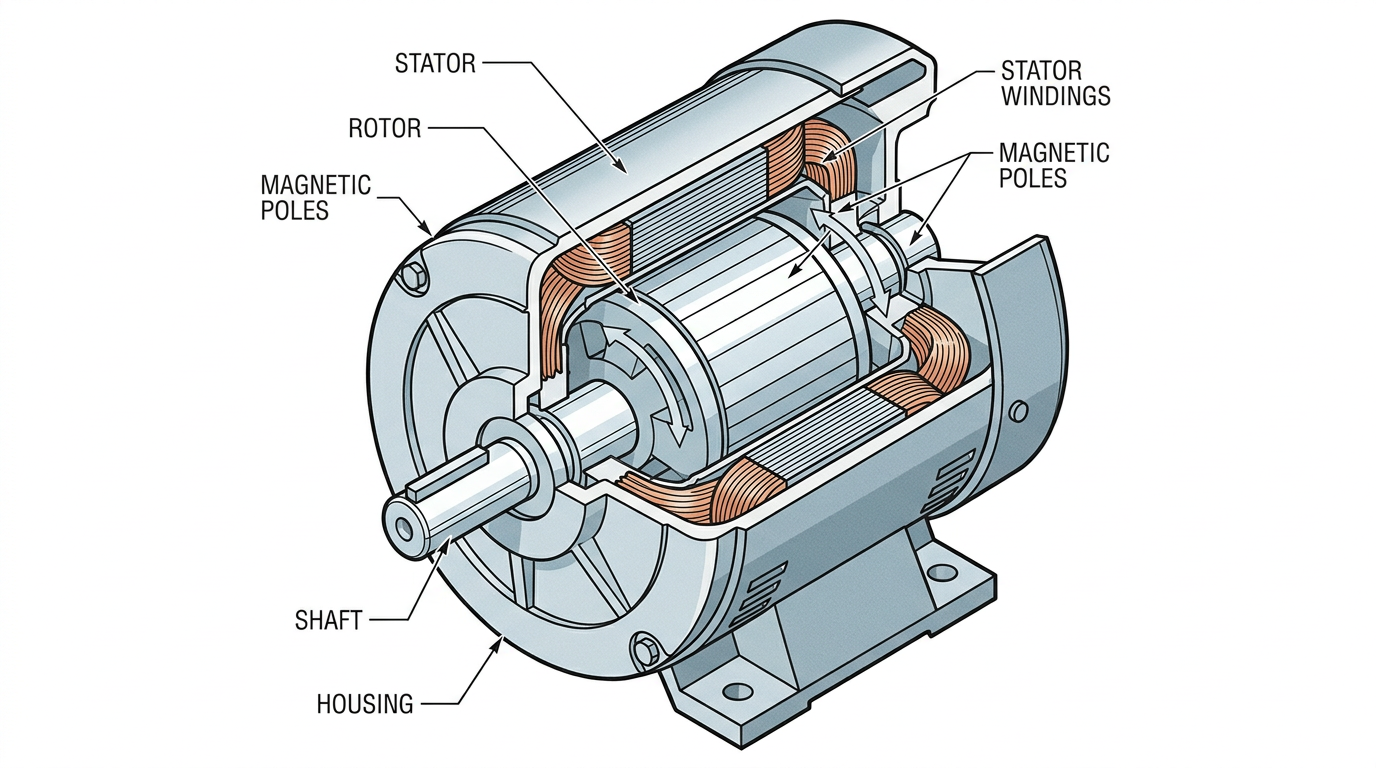
The rotational speed of the rotating magnetic field in an AC motor or generator, determined by the frequency of the AC supply and the number of magnetic poles in the stator. It is calculated as 120 times the frequency in hertz divided by the number of poles, giving the result in revolutions per minute.
Plain English
The exact speed at which the magnetic field inside an AC motor or generator spins. This speed is locked to the electrical frequency feeding the machine, so it never drifts or varies on its own.
Context Anchor
Seen in aircraft electrical-system discussions, especially when studying alternating-current motors, generators, and motor troubleshooting.
Derivation
From the Greek 'syn' (together) and 'chronos' (time). 'Synchronous' means happening together in time. The motor's field rotation is locked in step with the electrical frequency that drives it.
Why Pilots Care
AC instruments, gyros, and devices powered by aircraft AC systems depend on a stable synchronous speed for accurate operation. If frequency drops, instruments tied to that frequency will read incorrectly or fail.
Analogy
It is like a marching cadence: the beat sets the pace everyone is supposed to follow. In a motor, the electrical power sets the pace for the rotating magnetic field.
Grounding Statement
If the electrical power feeding a motor changes its timing, the Synchronous Speed changes with it.
Intuition Check
Synchronous Speed is not simply the speed of any two things moving together. In this context, it means the reference speed of the motor’s rotating magnetic field, set by the electrical power and motor design.
Example Sentence 1
An AC motor running on 400 Hz aircraft power with four poles has a synchronous speed of 12,000 RPM.
Example Sentence 2
During engine start the generator accelerates until it locks at synchronous speed and begins supplying AC current.
Media