Plain English Meaning
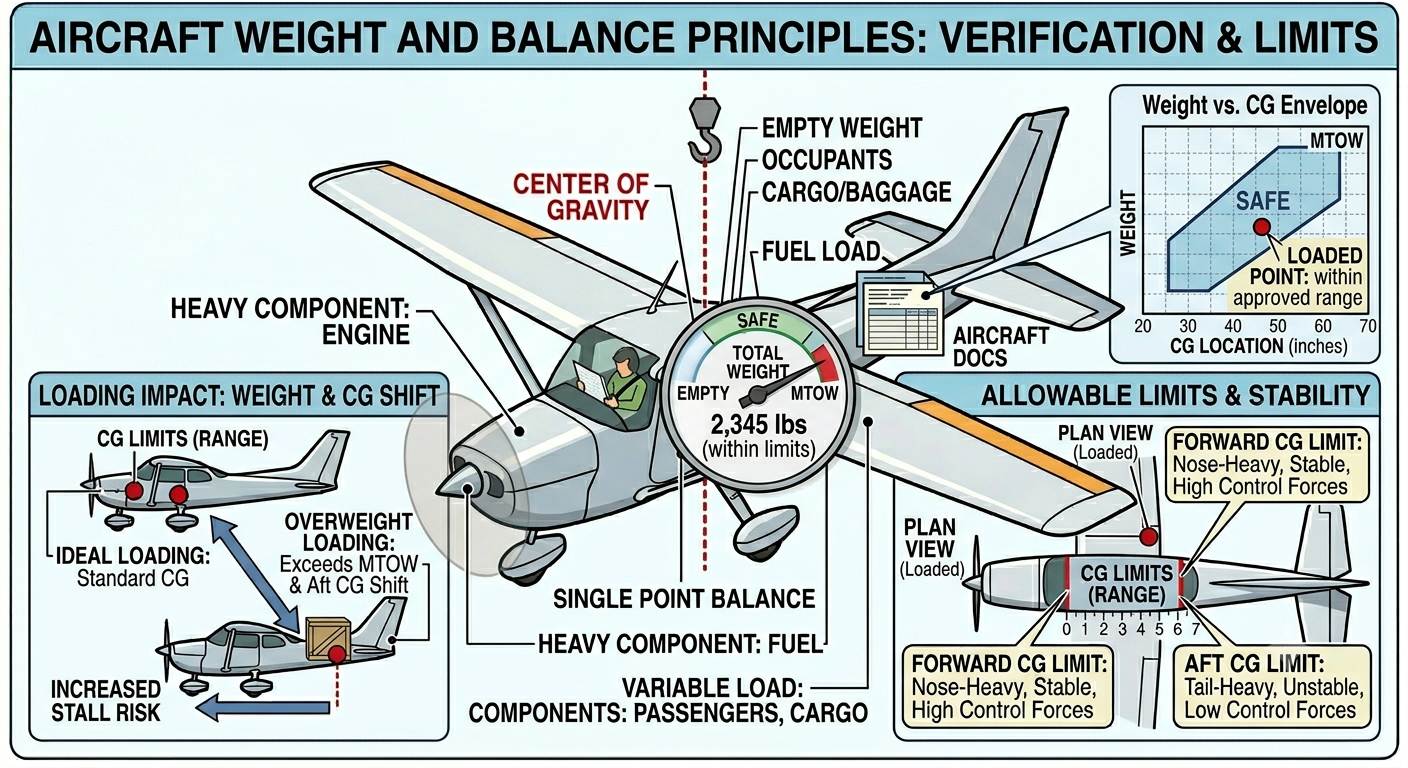
Before every flight, the pilot works out how heavy the aircraft is with people, fuel, and bags on board, and where that weight sits along the length of the aircraft. The total must not be too heavy, and the load must not be too far forward or too far back.
Full Definition
A required preflight calculation that confirms the aircraft is loaded within its certified maximum weight limits and that the center of gravity (the point where the aircraft's weight is balanced) falls within the manufacturer's allowable forward and aft limits for the planned phase of flight.
Context Anchor
Seen during preflight planning, aircraft loading, and in Electronic Flight Bag tools that help pilots calculate whether a planned load is within limits.
Why Pilots Care
Proper weight and balance ensures the aircraft remains controllable and performs within its certified envelope; errors can cause loss of control or structural damage.
Intuition Check
Do not read “balance” as just “feels even” or “looks evenly loaded.” In aviation, balance means the aircraft’s loaded center of gravity is inside the specific limits approved for that aircraft.
Example Sentence 1
Before departing with four passengers and full fuel, the pilot ran a weight & balance check in the EFB and confirmed the aircraft was within limits.
Example Sentence 2
An out-of-limits weight and balance can make the aircraft difficult or impossible to control on takeoff.
Media