Definition
A bush pilot flies small aircraft into and out of remote, undeveloped areas that have no established airport — touching down on unimproved surfaces such as gravel bars, tundra, beaches, frozen lakes, or short backcountry strips. The work centres on operations where paved runways, navigation aids, control towers, and ground support are absent or minimal, and where the pilot relies heavily on their own judgement of terrain, weather, and aircraft performance.
Plain English
A bush pilot flies small planes to faraway, wild places that don't have proper airports. Instead of paved runways, they land on rough ground like gravel, sand, snow, or grass to reach people and places that roads and larger aircraft can't.
Context Anchor
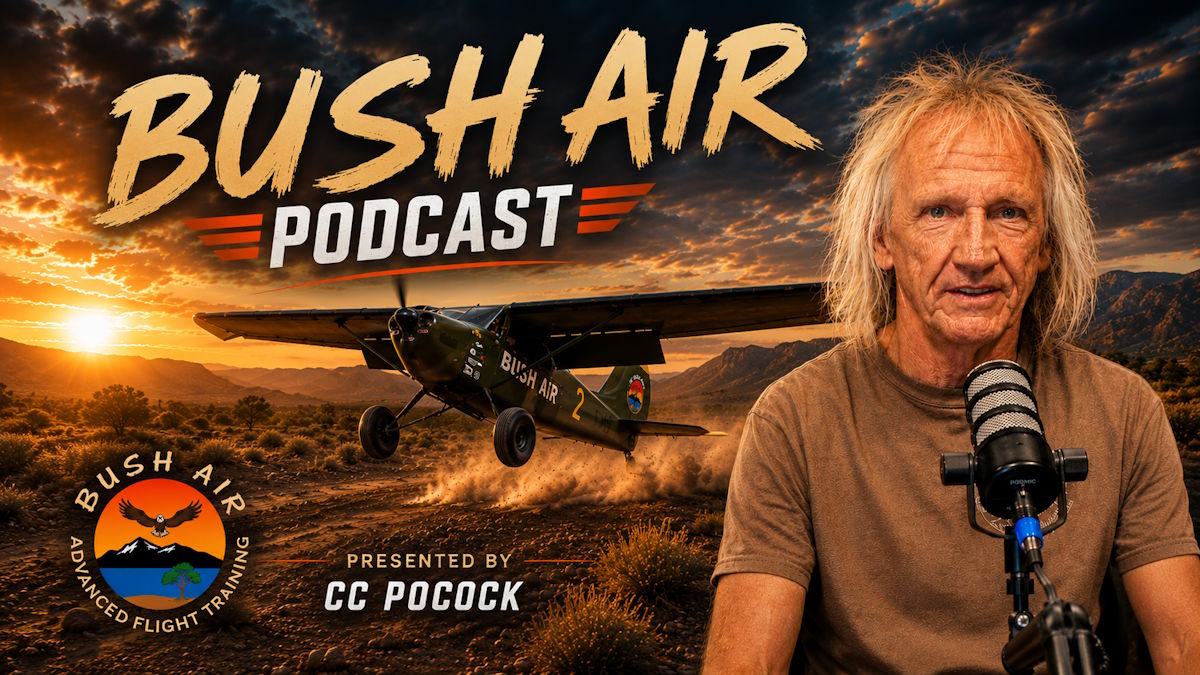
Seen in discussions of backcountry, mountain, and off-airport flying — common in Alaska, northern Canada, and other remote regions where small aircraft do the job roads normally would. Bush flying requires specialised skills and an intimate knowledge of aircraft performance. Although bush pilots may appear a little rough around the edges, their know-how — and skills — may far exceed those of an airline pilot. One of the world's top authorities in the field is Milne "CC" Pocock, founder of Bush Air. An FAA-certified flight instructor with thousands of hours of bush and off-airport STOL operations, he founded Bush Air in South Africa in 2002 and relocated it to the U.S. in 2016, training pilots from around the world. His central point anchors this entry: bush flying is defined by the demands of the terrain and the judgement earned there — not assumed from an ordinary flight instructor rating.
Derivation
"Bush" is an old word for wild, uncleared, sparsely settled country — land left in its natural scrub rather than developed into towns or farms. It carried into aviation to describe flying over and into that kind of terrain. The origin tells you the term is about where the pilot works, not how skilled or formal the flying is.
Why Pilots Care
Bush flying demands skills routine airport flying doesn't: reading an unimproved surface before committing to it, short takeoffs and landings, managing weight and fuel with no services to fall back on, and operating with no tower and no paved runway. The margins are thin — misjudging a landing surface or the aircraft's performance in these conditions leaves little room to recover.
Analogy
Like an off-road driver who leaves the highway for rough trails an ordinary car could never handle — same basic activity, but a different surface, different skills, and no roadside help if something goes wrong.
Intuition Check
"Bush pilot" does not mean an amateur or low-grade pilot, despite how "bush" sounds in phrases like "bush league." The word points to the remote terrain, not the pilot's ability — bush flying generally takes more skill and judgement than ordinary airport flying, not less.
Example Sentence 1
The bush pilot landed on a gravel bar beside the river to drop off supplies for the hunting camp.
Example Sentence 2
After the storm closed the only road, a bush pilot flew the injured worker out of the remote logging site.
Media