Plain English Meaning
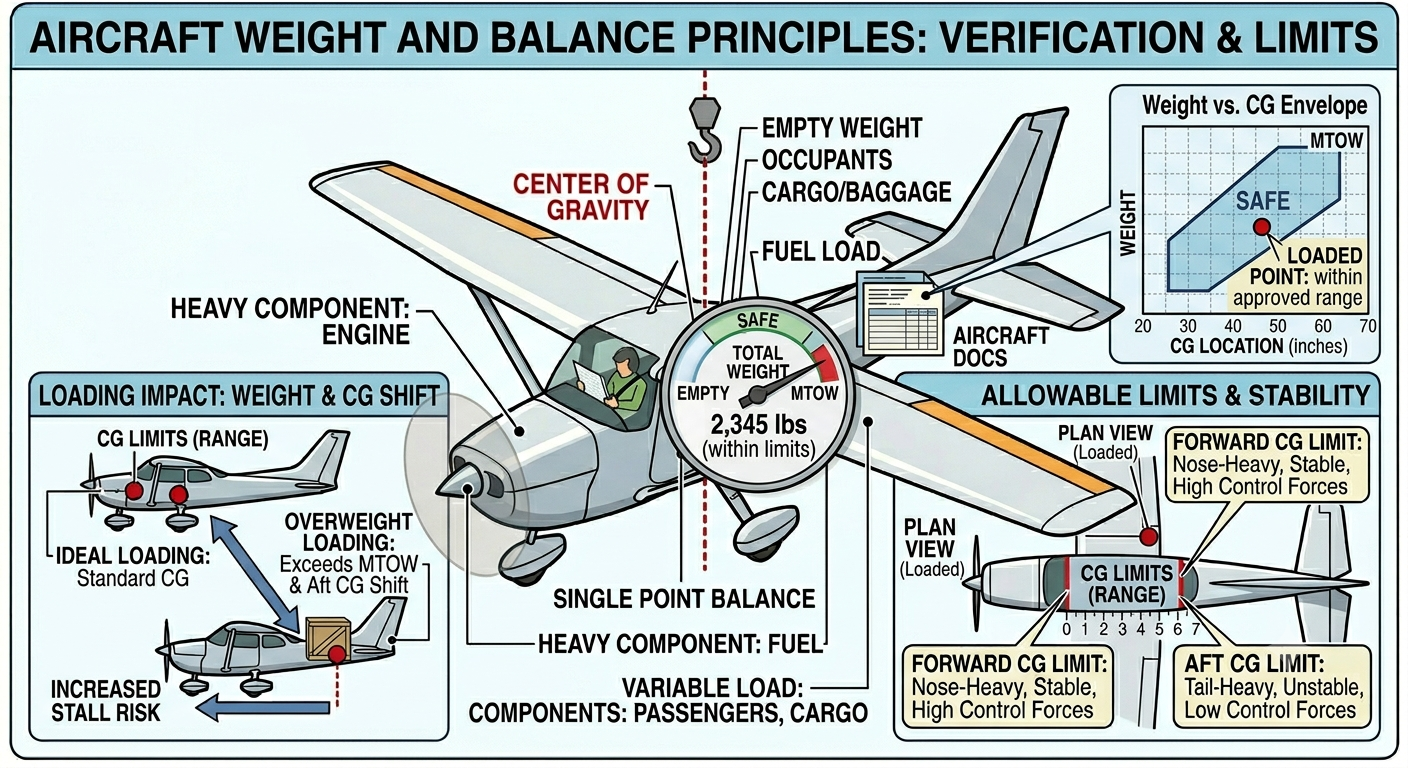
Before flying, the pilot checks two things: the airplane is not too heavy, and the load is positioned so the airplane will balance properly in flight.
Full Definition
The calculation and verification that an aircraft's total loaded weight is within its certified limits and that the center of gravity falls within the approved forward and aft range for the planned flight. It accounts for the empty aircraft, fuel, occupants, baggage, and any cargo, using figures and arms published in the aircraft's weight and balance documents.
Context Anchor
A pilot encounters weight and balance during preflight planning, especially before carrying passengers, baggage, cargo, or a different fuel load than usual.
Derivation
Weight comes from an old word meaning heaviness. Balance comes from a Latin idea of two weighing pans, where things must be even enough to stay under control. Together, the phrase points to two separate checks: how heavy the airplane is, and where that heaviness is located.
Why Pilots Care
An out-of-limit condition reduces stability, increases stall risk, or can cause loss of control.
Analogy
Think of carrying a loaded wheelbarrow. If it is too heavy, it is hard to move; if the load is too far forward or too far back, it becomes hard to control. An airplane has the same kind of concern, but with strict limits that must be checked before flight.
Intuition Check
Do not treat weight and balance as one vague idea of being “loaded okay.” In aviation, it means two specific checks: total weight must be within limits, and the load must be positioned so the airplane balances within its approved range.
Example Sentence 1
Before the cross-country, the pilot completed a weight and balance calculation to confirm the airplane was within limits with full fuel and three passengers.
Example Sentence 2
A forward shift in weight and balance improved pitch stability during the approach.
Media